
The Day I Almost Threw Away My Favorite Sauté Pan
We’ve all been there. You’re searing a steak or reducing a sauce, the heat gets a little too high, and before you know it, the bottom of your prized stainless steel pan looks like it was rescued from a house fire. I’m a bit of a kitchen fanatic, and my collection of All-Clad and Le Creuset is my pride and joy. But over the years, that stubborn, black, carbonized “crust” starts to creep up the sides and cover the bottoms. I’ve tried the boiling vinegar trick, the baking soda paste, and even those smelly oven cleaners that make you feel like you need a hazmat suit just to breathe in the kitchen.
None of them quite did the trick without hours of back-breaking scrubbing. So, when I stumbled upon the Multi-Purpose Pan Bottom Cleaner for Kitchen Cookware Decontamination, I was skeptical. It promised a “remarkably simple” 3-step process and claimed to save energy. At $29.97, it wasn’t the cheapest option on the shelf, but if it could save my $200 pans, it was a bargain. I decided to put it to the ultimate test on a pan I had basically given up on.
First Impressions: What’s Inside the Tub?
Packaging and Texture
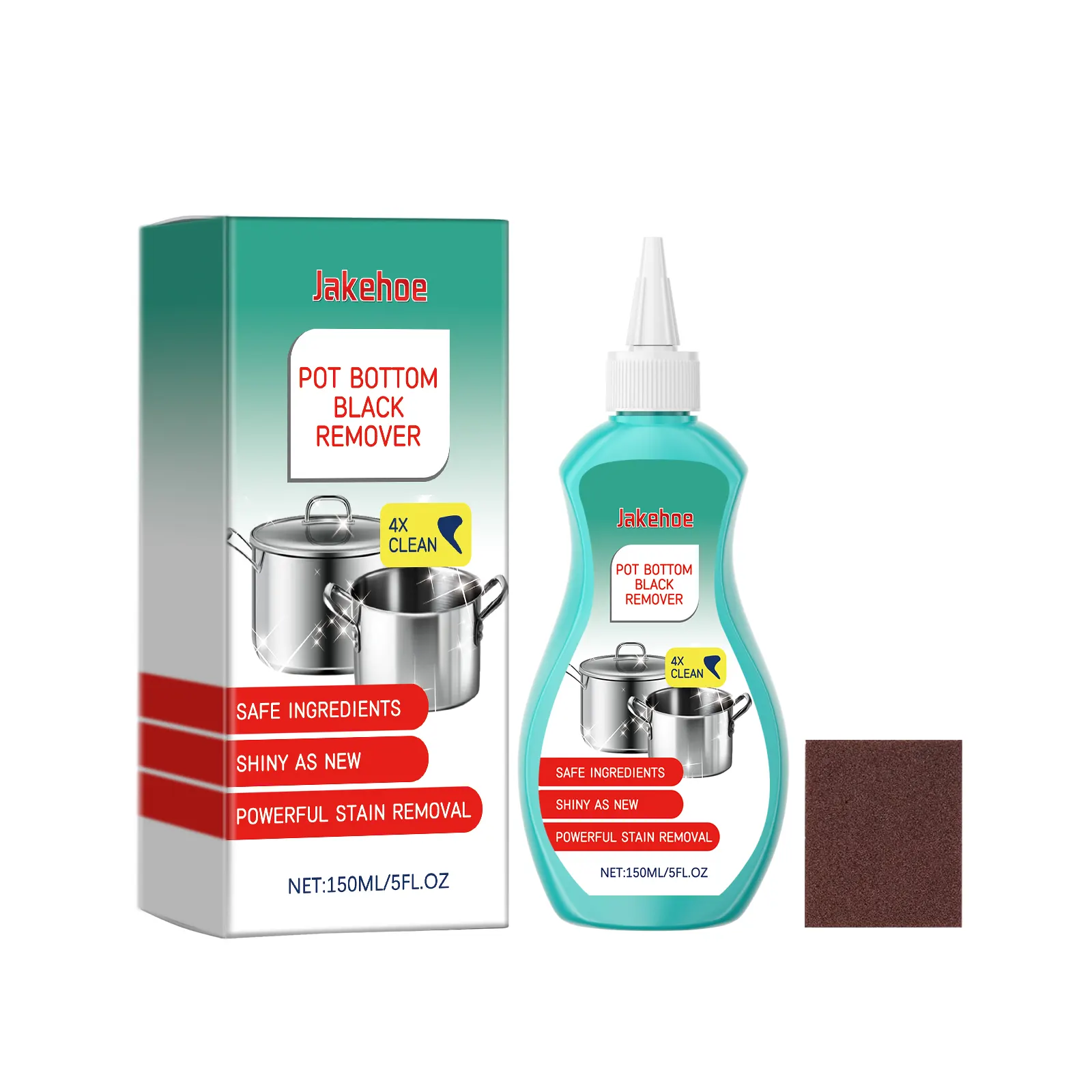
The product arrived in a sturdy container, and the first thing I noticed was the weight. It feels concentrated. Unlike liquid degreasers that are mostly water, this has a paste-like consistency that stays where you put it. This is crucial because if a cleaner drips off the vertical sides of a pot, it can’t do its job. The texture is smooth but feels like it has some “bite” to it.
The Smell Test (A Pleasant Surprise)
If you’ve ever used Easy-Off, you know that terrifying chemical scent that stays in your lungs for hours. This pan bottom cleaner is completely different. The description mentioned “no strong pungent odor,” and they weren’t lying. It smells clean, almost neutral. I didn’t feel the need to crack every window in the house or wear a mask while applying it. This alone makes it a winner for anyone living in a small apartment or those sensitive to harsh chemicals.
Putting it to the Test: My 12-Hour Experiment
I chose my old reliable copper-bottomed sauté pan. It had a thick layer of black carbonized grease that had been baked on over at least three years of heavy use. I had tried SOS pads on it months ago, but I gave up after five minutes because it felt like I was trying to sand down a diamond.
Step 1: The Application
I followed the instructions to the letter. I applied a generous, even layer of the paste over the entire bottom of the pan. I used a small spatula to make sure it was thick enough that I couldn’t see the metal underneath. The paste spread easily and adhered well to the curved edges of the pan.
Step 2: The Long Wait
The instructions say to cover it with plastic wrap and let it sit for 12 hours. This is the secret sauce. The plastic wrap prevents the active ingredients—the disodium EDTA and sodium bicarbonate—from drying out. It keeps the chemical reaction active against the carbon. I wrapped my pan tightly in Saran wrap and left it on the counter overnight. It felt a bit like a science project.
Step 3: The Reveal
The next morning, I peeled back the plastic. The white paste had turned a brownish-grey color, which I took as a good sign—it was clearly lifting the gunk. I took the included sandpaper sponge, added a splash of water, and started to scrub. To my absolute amazement, the black crust didn’t just sit there; it started to liquefy and slide off. Within about five minutes of moderate scrubbing (not the “workout” level scrubbing I’m used to), I was seeing shiny metal again. After a quick rinse with warm water, the pan looked almost brand new.
Why This Formula Works Differently
I did a little digging into the ingredients listed: disodium EDTA, sodium bicarbonate, and lauryl ether 7.
- Sodium Bicarbonate: We all know this as baking soda, but in this concentrated form, it acts as a mild abrasive and a pH buffer that helps break down acidic food stains.
- Disodium EDTA: This is a chelating agent. It basically “grabs” onto the metal ions in the burnt-on food and hard water deposits, making them water-soluble. It’s what makes the “lifting” action possible.
- Lauryl Ether 7: This is a powerful but mild surfactant. It lowers the surface tension of the water so the cleaner can penetrate deep into the microscopic cracks of the carbonized layer.
The combination is clever because it doesn’t rely on “burning” the grease off with caustic soda (which can ruin your skin and the pan’s finish). Instead, it’s a slow-and-steady chemical breakdown that respects the integrity of your cookware.
Multi-Purpose Pan Bottom Cleaner vs. The Competition
How does this stack up against the stuff you find at the grocery store? Here is a quick breakdown of my experience comparing this to other common methods.
| Feature | This Pan Bottom Cleaner | Baking Soda & Vinegar | Standard Oven Cleaner |
|---|---|---|---|
| Effort Level | Low (Wait-heavy) | High (Scrub-heavy) | Medium |
| Odor | Neutral/Mild | Vinegar scent | Extremely Pungent |
| Results | Professional grade | Hit or Miss | Effective but Risky |
| Time Required | 12 Hours | 30 Minutes | 2-4 Hours |
The Good and the Bad: Pros and Cons
No product is perfect, and while I’m impressed, there are a few things you should know before you click “add to cart.”

